Timezone Shifts Drive Decision Pacing Adjustments During Multi-Hand Blackjack Sessions on Portable Devices in International Markets
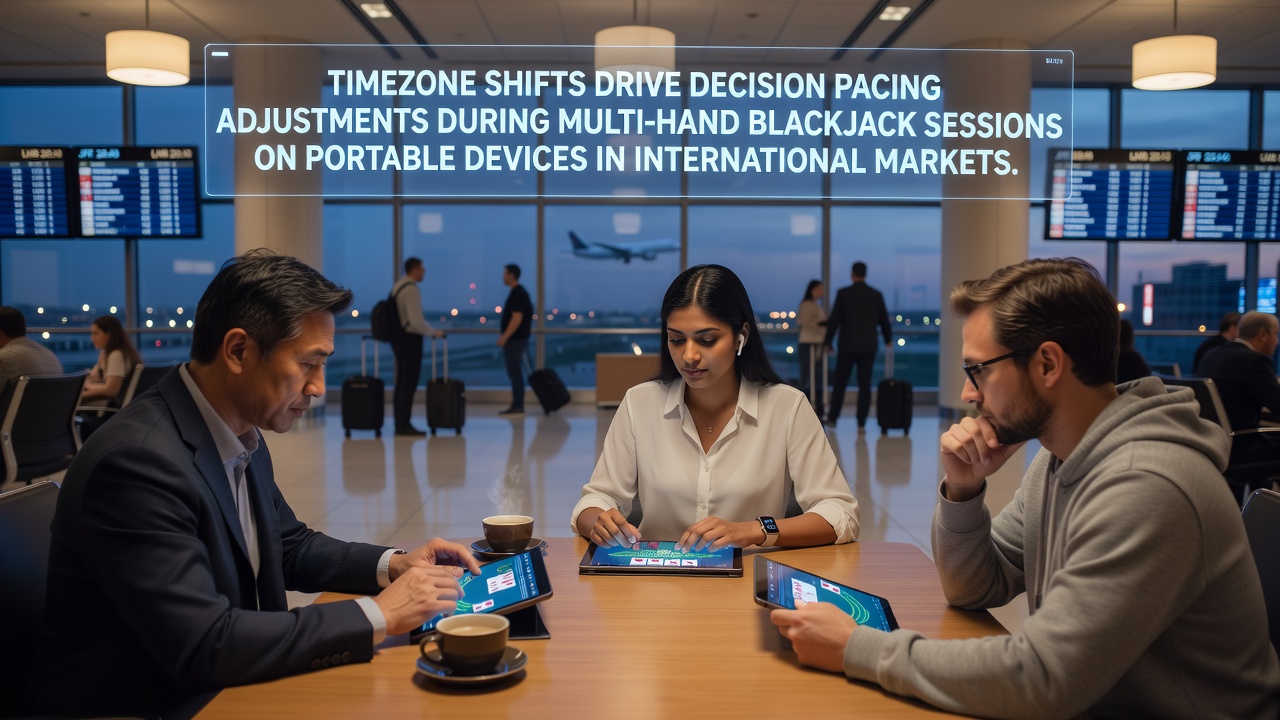
Players engaged in multi-hand blackjack on portable devices encounter distinct pacing challenges when timezone differences intersect with session timing, and operators in international markets have documented these patterns through platform analytics since the expansion of mobile gaming infrastructure. Data from cross-border gaming services shows that users connecting from regions separated by six or more hours from the game server often modify their decision intervals, particularly during extended multi-hand sequences where each round requires sequential choices across multiple positions.
Platform Mechanics and Multi-Hand Formats
Multi-hand blackjack applications on smartphones and tablets allow simultaneous play across two to five hands per round, which compresses the decision window compared to single-hand formats. Software timestamps record player response times at each decision point, and these logs reveal consistent variations tied to the user's local clock rather than the server's designated timezone. In markets spanning Asia-Pacific and European connections, for instance, participants frequently slow their input rates when sessions extend past local midnight, even as the central game engine maintains a fixed operational schedule.
Observed Adjustments in Decision Timing
Analytics platforms serving international users report that a six-hour timezone offset correlates with measurable shifts in average decision duration per hand. Players located east of the server timezone tend to accelerate early-session choices while extending pauses during later rounds, whereas those west of the server often introduce longer intervals from the outset. These adjustments appear in aggregated data sets collected through mobile application interfaces, where input latency metrics are tracked independently of network conditions.
Regional Patterns Across International Markets
Operators active in Latin American and Southeast Asian corridors note that sessions initiated during local afternoon hours but aligned with server evening produce steadier pacing throughout multi-hand rounds. In July 2026, platform reports from several providers indicated a rise in cross-timezone participation following infrastructure upgrades that reduced mobile latency in those regions. Users in these markets adjusted bet sizing sequences more deliberately when their local time diverged from the primary game clock, according to session metadata compiled by regional data centers.

North American players connecting to servers hosted in European facilities exhibit similar trends, with decision pacing lengthening as the local evening progresses. Industry monitoring from the Canadian Gaming Association has tracked these behaviors in multi-hand environments, showing that participants incorporate brief review pauses between hands when timezone misalignment extends session length beyond typical personal schedules.
Data Correlations and External Factors
Studies examining mobile gaming logs across multiple jurisdictions find that decision pacing adjustments scale with the degree of timezone separation rather than absolute session duration alone. Research conducted through academic partnerships with gaming technology firms demonstrates that a three-hour offset produces modest interval increases, while offsets exceeding eight hours prompt more pronounced slowing during the second half of multi-hand sequences. Network stability metrics, collected alongside these timing records, confirm that the observed changes stem from player behavior rather than connection variability.
Platform operators also record correlations between timezone-driven pacing and wager progression patterns. Data indicates that users who extend decision times during offset sessions tend to maintain consistent bet levels across hands, whereas those who maintain faster pacing sometimes accelerate progression sequences. These patterns emerge consistently in logs from markets where portable device usage exceeds desktop participation.
Regulatory and Infrastructure Context
International gaming frameworks require operators to maintain accurate session records that include timezone identifiers for each connection. Reports submitted to bodies such as the Malta Gaming Authority include aggregated timing statistics that operators use to calibrate interface responsiveness for multi-hand formats. In parallel, hardware manufacturers have introduced device-level settings that allow users to align application clocks with local time, which in turn influences how pacing adjustments manifest during live sessions.
Conclusion
Timezone shifts continue to shape decision pacing in multi-hand blackjack on portable devices as international markets expand mobile access. Platform data collected through 2026 shows that these adjustments occur systematically across regions, driven by the interaction between local clocks and centralized game servers. Operators and researchers track these patterns through timestamp analysis and latency records, providing a factual basis for understanding pacing dynamics in cross-border environments.