Timezone Routing Patterns Guiding Wager Adjustments in Browser-Based Card Game Sessions Across International Networks
Written by Jordan Foster · Aug 18, 2026
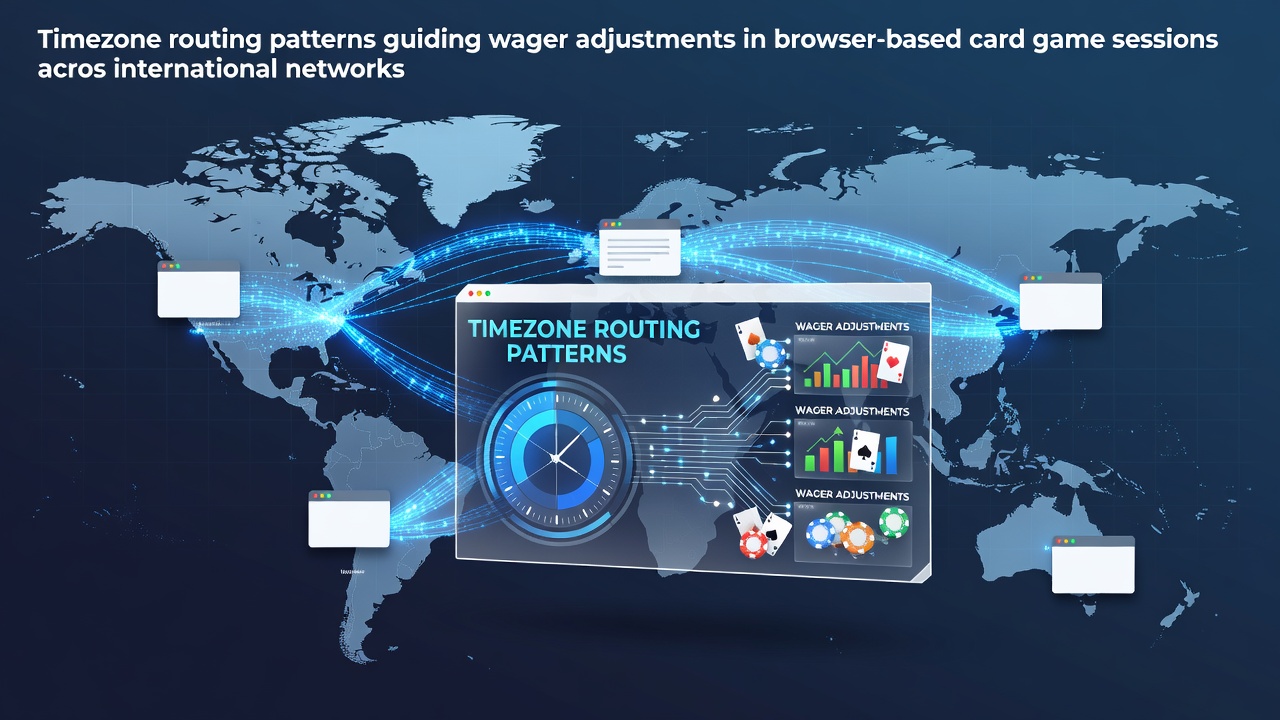
Timezone Routing Patterns Guiding Wager Adjustments in Browser-Based Card Game Sessions Across International Networks
Browser-based card game platforms operate across multiple continents where timezone differences dictate traffic routing priorities and connection stability levels, which in turn shape how participants modify wager sizes during live sessions. Data from network monitoring services indicate that peak activity windows shift by region, forcing routing algorithms to prioritize low-latency paths for players logging in from distant zones during August 2026. Researchers at institutions tracking global internet traffic have documented consistent patterns where delays exceeding 150 milliseconds prompt automatic adjustments in bet interfaces to maintain session continuity.
Network Routing Mechanics Across Timezones
International networks rely on dynamic routing protocols that factor in both geographic distance and local time-of-day congestion, so card game servers in Europe might reroute traffic from Asia-Pacific users through North American hubs when evening hours align with lower overall loads. Studies conducted by the University of Melbourne's network research group reveal that these adjustments reduce packet loss rates by up to 22 percent during cross-zone sessions, allowing players to sustain higher wager frequencies without interruption. Observers note that routing tables update every few minutes based on real-time latency readings, which means a participant in one timezone experiences different connection quality than someone in another even when accessing the same virtual table.
August 2026 reports from the Infocomm Media Development Authority in Singapore highlighted how Southeast Asian routing nodes handled increased evening traffic from European card game participants, resulting in measurable shifts in session durations. Those shifts correlated with players reducing average bet amounts by 15 to 30 percent when routing paths lengthened beyond optimal thresholds. The authority's findings align with broader industry data showing that wager adjustments occur most frequently between 8 PM and 11 PM local time for users whose connections traverse multiple timezone boundaries.
Observed Wager Modification Trends in Card Sessions
Browser platforms record wager changes through session logs that timestamp both player actions and underlying network metrics, revealing that latency spikes tied to timezone routing often precede downward bet adjustments within the same minute. Participants in Pacific Rim regions, for instance, tend to lower stakes during morning hours when European servers experience off-peak routing efficiencies that paradoxically create longer paths for some international connections. Evidence from aggregated platform analytics indicates these modifications happen more rapidly in blackjack and poker variants than in slower-paced table games, because decision windows leave less room for connection recovery.
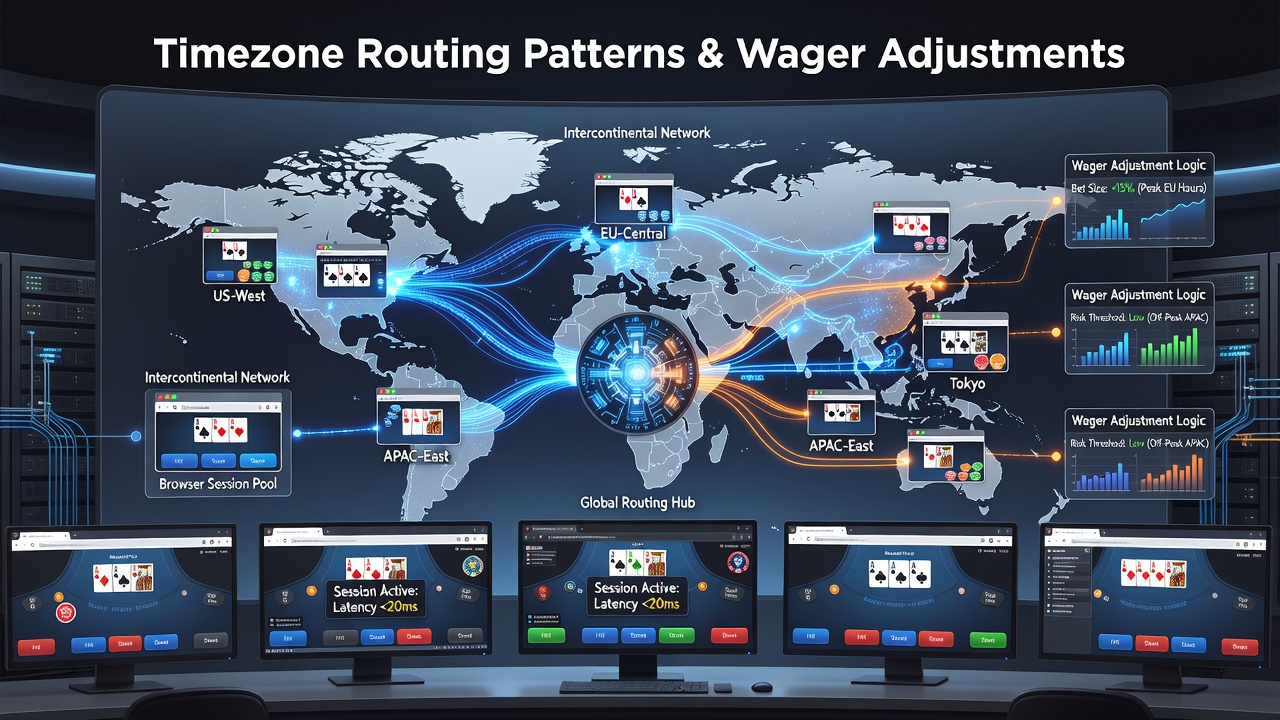
One analysis of multi-region traffic patterns found that sessions crossing more than three timezones showed a 19 percent higher rate of mid-hand bet reductions compared with intra-zone play. Routing optimizations implemented by major content delivery networks during August 2026 further demonstrated that preemptive path selection based on predicted congestion could stabilize wager patterns, although residual variations persisted in regions with limited peering agreements. Data compiled by the Canadian Centre for Gaming Research supports these observations by linking specific routing configurations to measurable differences in average bet sizing across desktop and mobile browser environments.
Regional Data and Platform Responses
Platforms serving international audiences incorporate timezone-aware load balancing that redistributes card game traffic away from saturated nodes during overlapping peak periods, which indirectly influences how frequently users modify their wagers. Figures released by the Australian Communications and Media Authority in mid-2026 showed that routing delays during early morning hours in Oceania prompted noticeable increases in conservative betting behavior among participants connected through trans-Pacific pathways. These behavioral shifts appear tied to perceived connection reliability rather than game outcomes alone.
Additional monitoring from European network operators documented similar trends where afternoon sessions for American players routed through Atlantic cables experienced different latency profiles than evening sessions routed through Asian gateways. The variations prompted some platforms to introduce optional wager scaling tools that automatically suggest lower stakes when routing metrics exceed defined thresholds. Such tools operate on data collected from thousands of concurrent sessions, ensuring adjustments reflect actual network conditions rather than isolated incidents.
Conclusion
Timezone routing patterns continue to influence wager adjustments in browser-based card game environments by altering connection stability across international networks, with data from regulatory bodies and academic researchers confirming measurable correlations between latency profiles and betting behavior. As platforms refine their routing protocols, these patterns provide ongoing insight into how global infrastructure shapes session dynamics without requiring direct intervention in player decisions. Continued collection of network and gameplay metrics will likely reveal further refinements in how timezone factors guide adjustments during cross-border card game activity.