Sweepstakes Casino Sector Confronts State Restrictions Entering 2026

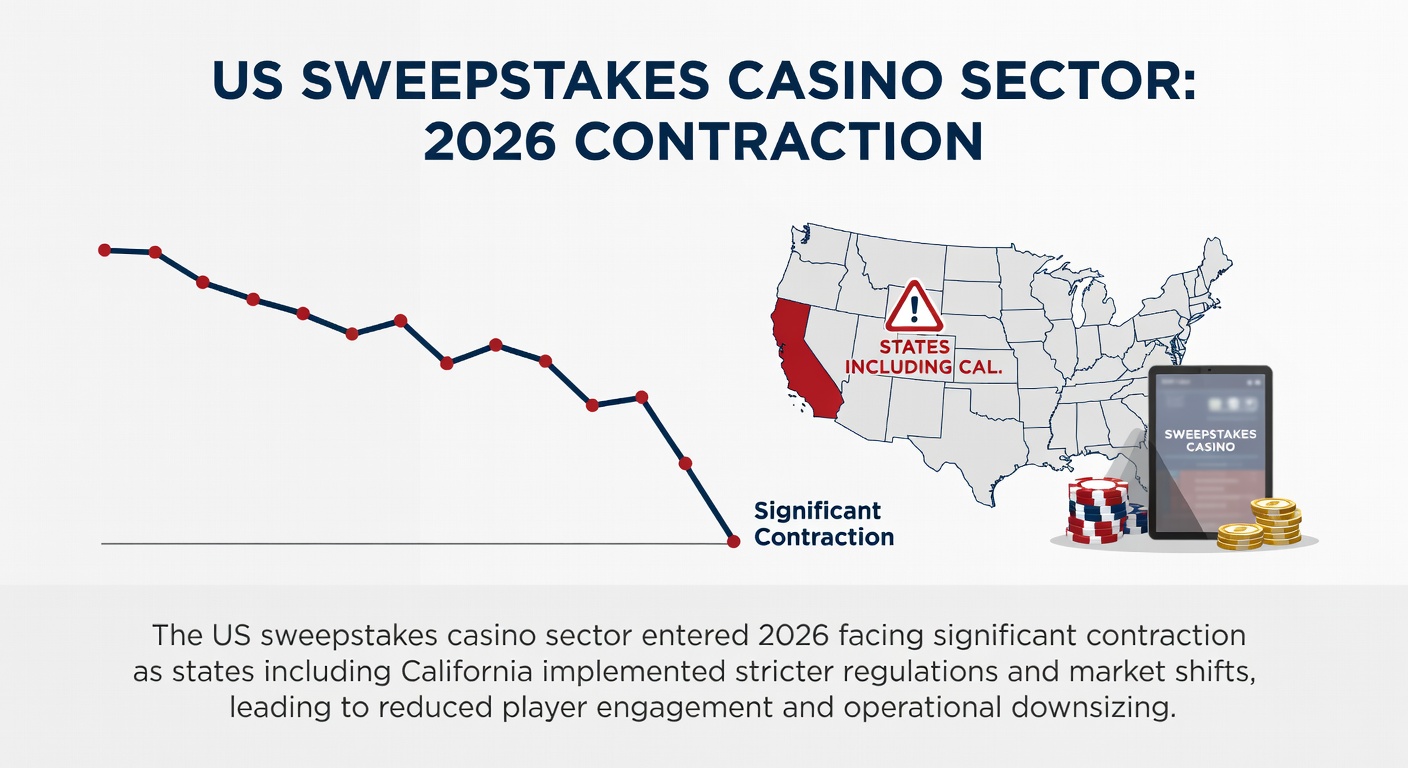
The US sweepstakes casino sector entered 2026 facing significant contraction as states including California via Assembly Bill 831 effective January 1 2026 and Indiana via House Bill 1052 signed March 2026 with July enforcement banned or restricted operations removing a substantial portion of national revenue; major operators such as Virtual Gaming Worlds parent of Chumba Casino and LuckyLand Slots began exiting those states while launching new brands like Just Slots without dual-coin mechanics and shifting strategies toward responsible play payment transparency and potential migration to other models like prediction markets.
Key Legislative Actions in California and Indiana
California's Assembly Bill 831 took effect at the start of the year and eliminated sweepstakes casino operations across the state while Indiana's House Bill 1052 followed a similar path after its March signing with full enforcement scheduled for July 2026 according to records from the California Legislative Information portal. Observers note that these two states together accounted for a meaningful share of sweepstakes revenue before the measures passed and the combined effect has forced operators to reevaluate their national footprints in real time. Data from state legislative tracking shows enforcement timelines were set deliberately to allow limited transition periods yet many platforms chose immediate withdrawal to avoid compliance risks.
Operator Exits and Brand Adjustments
Virtual Gaming Worlds responded by pulling its existing platforms from both California and Indiana while introducing Just Slots as a streamlined offering that removes dual-coin mechanics entirely. Other companies followed comparable routes with portfolio reviews leading to the closure of multiple state-specific sites and the consolidation of user bases into remaining legal jurisdictions. Those who've tracked operator filings report that several firms redirected marketing budgets away from restricted markets and toward states where sweepstakes models continue to operate without new limitations.
What's interesting is how quickly some operators began testing alternative engagement formats such as prediction markets that fall outside traditional sweepstakes definitions and therefore may avoid the same regulatory triggers. Researchers tracking industry filings have observed increased applications for licenses in adjacent verticals as companies seek diversification paths that maintain engagement without violating the new state rules.
Strategic Shifts Toward Compliance and Transparency
Companies that remain active in permitted states have accelerated investments in responsible play tools and clearer payment disclosures as part of broader compliance frameworks. Evidence from operator announcements indicates these changes include enhanced age verification systems and more granular transaction reporting that align with expectations from state regulators. People who've examined recent earnings calls note references to revised marketing language that emphasizes entertainment value over monetary outcomes in an effort to stay within evolving legal boundaries.
And while some operators explore prediction market models others focus on tightening existing sweepstakes mechanics to reduce perceived similarities with prohibited gambling formats. Figures from compliance reports show a measurable uptick in third-party audits and player education initiatives rolled out during the first quarter of 2026. Those adaptations reflect a sector-wide recognition that regulatory pressure is likely to continue at the state level rather than recede.
Current Landscape as of May 2026
By May 2026 California's ban had been in place for five months and Indiana's enforcement date loomed just two months away prompting final preparations among remaining operators. State revenue data released in early spring showed measurable drops in sweepstakes-related activity in both jurisdictions while neighboring states without comparable restrictions reported modest upticks in user registrations. Industry associations tracking cross-border player migration have documented shifts toward platforms still operating legally in states such as Florida and Texas.
Observers note that the pace of new state-level proposals has increased since the California and Indiana measures passed suggesting the contraction could extend beyond the initial two states. Academic studies from university research centers examining similar regulatory patterns in other entertainment sectors indicate that once restrictions take hold operators typically require twelve to eighteen months to stabilize revenue streams through diversification.
Conclusion
The sweepstakes casino sector continues its adaptation through portfolio realignment regulatory compliance programs and exploration of adjacent business models as of mid-2026. Legislative actions in California and Indiana have removed substantial revenue sources and prompted measurable operational changes among major players including Virtual Gaming Worlds. Ongoing monitoring by state agencies and industry groups will determine whether additional jurisdictions adopt comparable restrictions or whether the current wave of adjustments stabilizes the remaining market.