Player Adaptation to Rule Variations in Multi-Hand Formats Across Internet-Based Gaming Applications
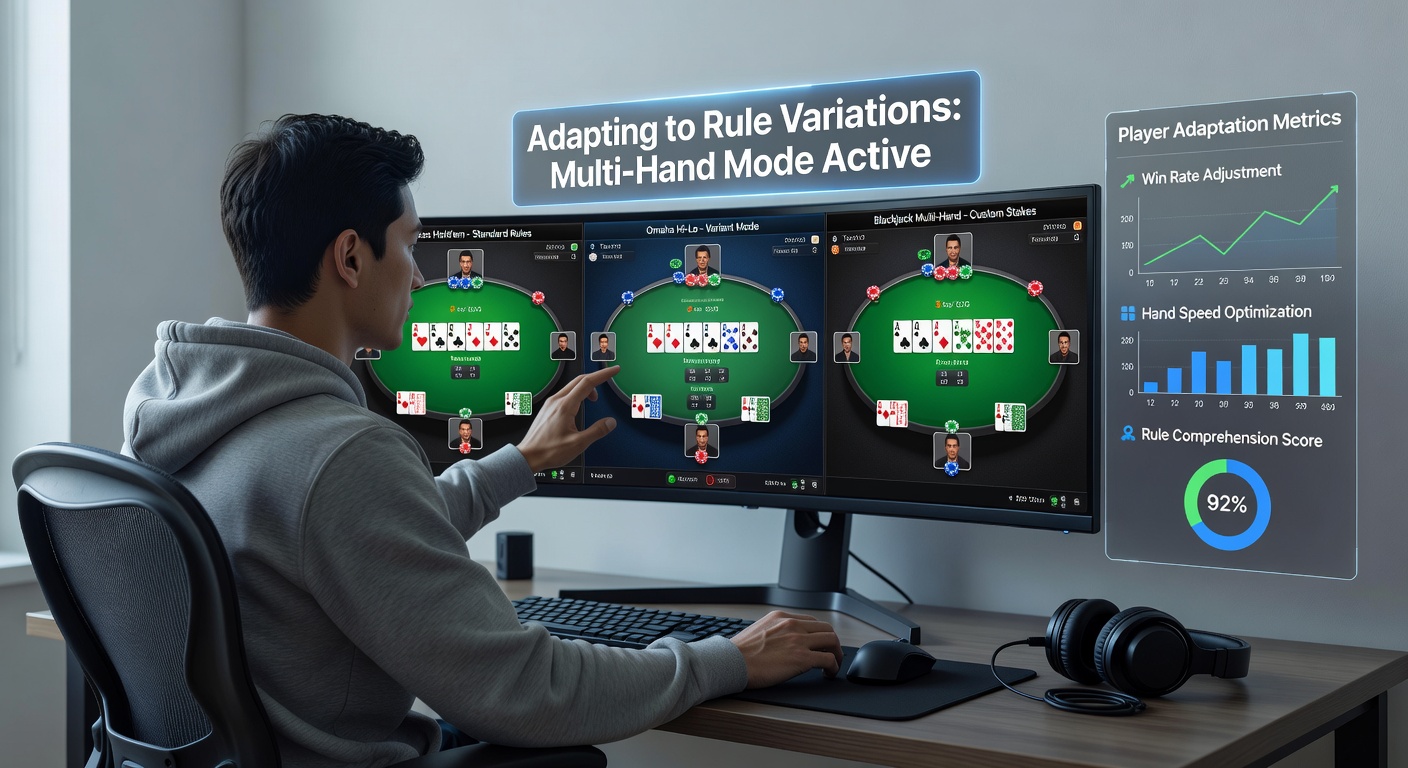
 Players encounter multi-hand formats in internet-based gaming applications where simultaneous hands create layered decision points, and rule variations across platforms force adjustments in real time. Multi-hand blackjack stands out as a primary example, since operators alter parameters such as dealer hit-or-stand thresholds on soft seventeen, payout ratios for blackjack, and restrictions on doubling after splits. These differences appear between software providers even when the core game remains the same. Data from industry tracking services shows participation in multi-hand modes increased steadily through early 2026, with June figures indicating a twelve percent rise in active sessions compared to the prior year. Operators in regulated markets adjust rules frequently to maintain house edges within approved ranges, and players respond by modifying bet sizing patterns and hand-selection priorities.
Common Rule Variations Across Platforms
Multi-hand formats introduce rule sets that diverge in several measurable ways. Some applications permit up to five concurrent hands with a single wager multiplier, while others cap the number at three and apply stricter splitting limits. Payout structures shift as well; certain titles return 3:2 on natural blackjacks across all hands, whereas others reduce this to 6:5 when multiple hands reach that outcome simultaneously.
Dealer rules create additional complexity. Applications licensed in North American jurisdictions often require the dealer to hit on soft seventeen, whereas European-facing platforms frequently enforce a stand-on-soft-seventeen policy. These distinctions alter basic strategy charts, and players must internalize separate decision trees depending on the operator selected. Research conducted by the Canadian Institute for Gaming Studies documented that users switching between platforms with opposing soft-seventeen rules required an average of forty-seven minutes of practice mode exposure before returning to prior accuracy levels.
Adaptation Mechanisms Observed in Player Behavior
Players develop adaptation routines that rely on both built-in tools and external resources. In-application strategy trainers update dynamically when rule parameters change, and many applications now embed quick-reference panels that highlight deviations from standard charts. Observers note that frequent users toggle between these panels and live hands during early sessions on unfamiliar platforms.
Third-party applications and browser extensions track rule sets across multiple operators, compiling side-by-side comparisons that users consult before depositing. One study released by the European Interactive Gaming Research Network in March 2026 examined session logs from over 180,000 accounts and found that individuals who consulted such comparison tools reduced deviation rates from optimal play by twenty-nine percent within the first ten multi-hand sessions.
Regional Patterns in Multi-Hand Engagement
Geographic licensing frameworks influence which rule variations predominate. Markets overseen by the Malta Gaming Authority tend to feature more liberal splitting allowances across multi-hand blackjack titles, while platforms regulated by Australian state authorities often impose tighter doubling restrictions. Players who migrate between regions report recalibrating their approach within two to three sessions once they recognize the dominant rule cluster.
June 2026 regulatory filings from several European operators revealed that multi-hand formats accounted for thirty-four percent of total blackjack volume in the preceding quarter, up from twenty-eight percent in the same period of 2025. The increase coincided with expanded mobile optimization that reduced latency during simultaneous hand resolutions, allowing faster iteration through rule variations.
Training Tools and Performance Metrics
Operators integrate adaptive tutorials that present rule-specific drills before granting access to real-money multi-hand tables. Completion rates for these tutorials reached seventy-eight percent among accounts opened after January 2026, according to aggregated platform analytics. Players who finished the drills demonstrated quicker stabilization of win-rate variance across rule sets compared with those who skipped the preparatory modules.
Academic researchers at the University of Nevada's International Gaming Institute published findings in May 2026 indicating that repeated exposure to alternating rule sets strengthens pattern recognition skills. Participants in controlled trials improved decision speed by an average of 1.8 seconds per hand after cycling through four distinct rule configurations over a two-week period.
Future Developments and Platform Responses
Software providers continue to refine detection systems that flag when players apply strategies calibrated to different rule sets. These systems adjust in-game prompts accordingly, surfacing reminders at points where prior habits would produce suboptimal outcomes. Integration of such prompts has expanded across both established and emerging operators, particularly those targeting cross-border audiences.
Industry associations such as the World Lottery Association have begun collecting standardized data on multi-hand play patterns, enabling more precise comparisons of adaptation timelines across jurisdictions. The resulting datasets are expected to inform future platform design choices that accommodate varying player experience levels.
Conclusion
Player adaptation to rule variations in multi-hand formats continues to evolve alongside platform capabilities and regulatory requirements. Tracking services document consistent growth in participation, while research institutions record measurable improvements in decision accuracy once users engage with comparative tools and practice modules. Regional licensing differences maintain distinct rule clusters that require ongoing recalibration, yet aggregated performance data suggests that structured exposure to these variations supports faster stabilization of play patterns across internet-based gaming applications.