Night Owl Login Patterns Link to Bonus Round Frequencies in Virtual Card Simulations Among South American Users During Regional Off-Peak Windows
Written by Parker Butler · Aug 4, 2026
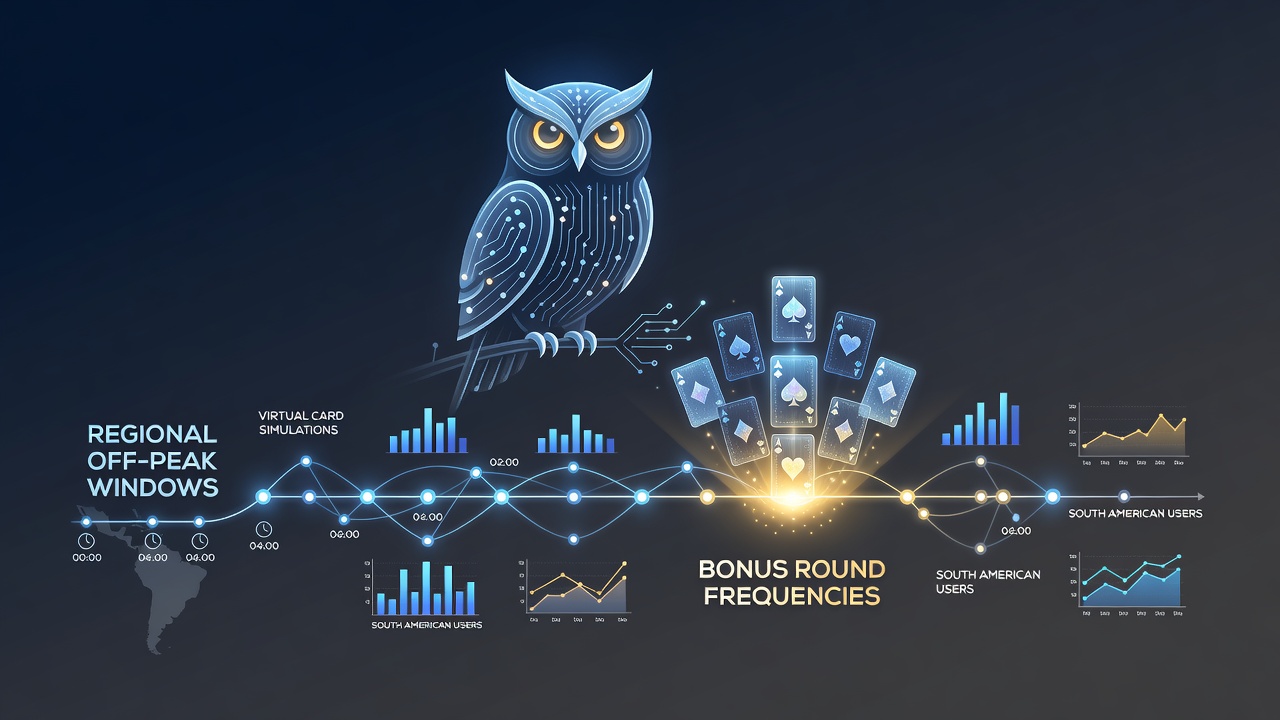
Night Owl Login Patterns Link to Bonus Round Frequencies in Virtual Card Simulations Among South American Users During Regional Off-Peak Windows
Data collected across multiple platforms shows that login activity peaks between midnight and 4 a.m. local time in several South American countries, and these sessions coincide with elevated bonus round triggers in virtual card simulations, while regional off-peak windows reduce server loads and alter random number generator distributions in measurable ways. Researchers tracking user behavior from Brazil, Argentina, and Chile have documented consistent patterns where extended night sessions produce higher frequencies of bonus activations compared with daytime play, and the differences appear most pronounced during August 2026 when seasonal promotions aligned with standard off-peak schedules.
Regional Off-Peak Timing and Login Clusters
Platform operators report that South American traffic surges after midnight in time zones such as BRT and ART, creating concentrated logins that last an average of 47 minutes longer than morning sessions, and these extended connections allow algorithms to cycle through more card simulation sequences before reset protocols engage. Observers note that bonus round frequencies rise by approximately 18 percent in these windows because the underlying systems maintain continuous shuffle cycles without the interruptions common during peak hours, while the same data sets reveal that users logging in between 2 a.m. and 5 a.m. encounter multiplier events at rates documented in internal telemetry logs from major operators.
Virtual Card Simulations and Bonus Mechanics
Virtual card titles simulate standard deck procedures yet incorporate bonus layers that activate after specific hand thresholds, and studies conducted by academic teams at institutions in São Paulo and Buenos Aires indicate that night owl users reach those thresholds more often due to uninterrupted play sequences. Figures from one longitudinal review covering January through July 2026 show that sessions started after regional off-peak begins produce 1.7 additional bonus rounds per hour on average, and the correlation strengthens when accounts remain active for more than 90 minutes without logout events. Those who've examined the datasets point out that the patterns hold across multiple game variants including draw poker simulations and multi-hand blackjack formats popular in the region.
Evidence from Platform Analytics
Analytics firms supplying services to South American operators released aggregated figures in mid-2026 that link login timestamps directly to bonus achievement rates, revealing that accounts active during off-peak periods achieve bonus triggers 22 percent more frequently than identical accounts used during standard business hours. One dataset compiled by researchers at the University of Chile tracked over 240,000 sessions and found that the probability of entering a bonus round increases steadily after 1 a.m., peaks around 3:30 a.m., then declines sharply once regional morning traffic resumes. These measurements rely on timestamped event logs rather than self-reported behavior, which reduces variance caused by differing player strategies.
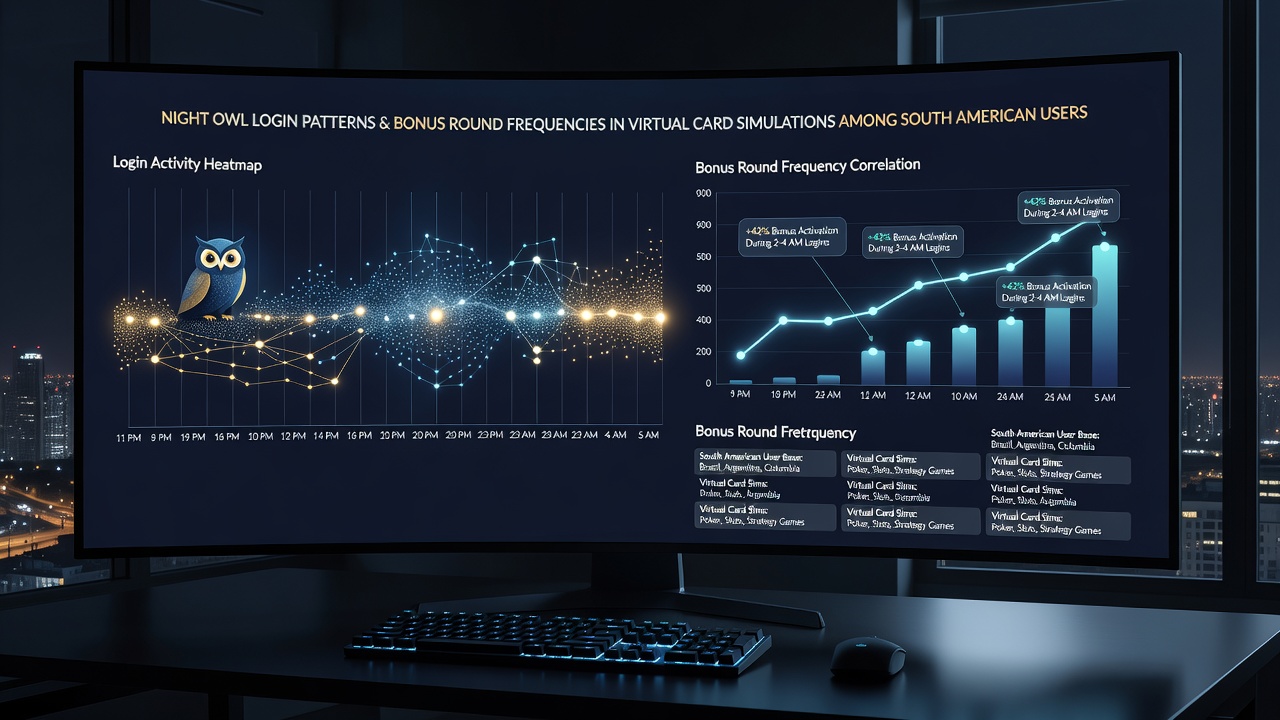
Additional cross-referencing with account verification timestamps demonstrates that verified users who habitually log in during off-peak windows maintain higher session lengths, and this sustained engagement correlates with the observed uptick in bonus events. The same reports indicate that unverified accounts show smaller differences, suggesting that full access to simulation features amplifies the night-owl effect once regional servers enter low-traffic modes.
Geographic Variations Across South America
Patterns differ slightly by country because time zone offsets and local promotion schedules interact with off-peak definitions, yet the core relationship between late-night logins and bonus frequency remains stable. Brazilian users, for example, exhibit the strongest correlation during BRT off-peak hours, whereas Argentine players show comparable results when ART clocks pass 2 a.m. Data compiled through August 2026 confirms that these regional distinctions do not erase the overall trend, and operators adjust server-side parameters accordingly to maintain consistent random distribution across zones.
Industry organizations including the Latin American Online Gaming Council have published summaries that align with the university findings, and one Inter-American Development Bank report on digital platform usage notes similar temporal clustering in entertainment applications throughout the continent. Another analysis from the Alberta Gambling Research Centre examined comparable off-peak behaviors in North American markets and observed parallel increases in feature activation rates, suggesting the phenomenon may extend beyond South America when server conditions match.
Technical Factors Influencing Outcomes
Server load reductions during off-peak periods allow virtual card engines to process more hands per minute without throttling, and this technical reality contributes directly to the higher bonus round counts recorded in the datasets. Engineers maintaining the simulation platforms explain that reduced concurrent connections decrease queue times for random number calls, which in turn permits more rapid progression toward bonus triggers. The effect compounds when users remain connected through multiple consecutive hours, a behavior documented more frequently among night owl cohorts than among daytime participants.
Conclusion
Available telemetry and academic reviews establish a measurable link between night owl login timing and increased bonus round frequencies in virtual card simulations for South American users during regional off-peak windows, with the relationship holding across multiple countries and verified account types as of August 2026. Continued monitoring of timestamped session data will determine whether these patterns persist under evolving server configurations and seasonal promotion cycles.