Linkage Patterns Between Device Battery Levels and Decision Intervals During Simulated Dice Roll Sequences on Portable Platforms
Written by Jordan Foster · Aug 11, 2026
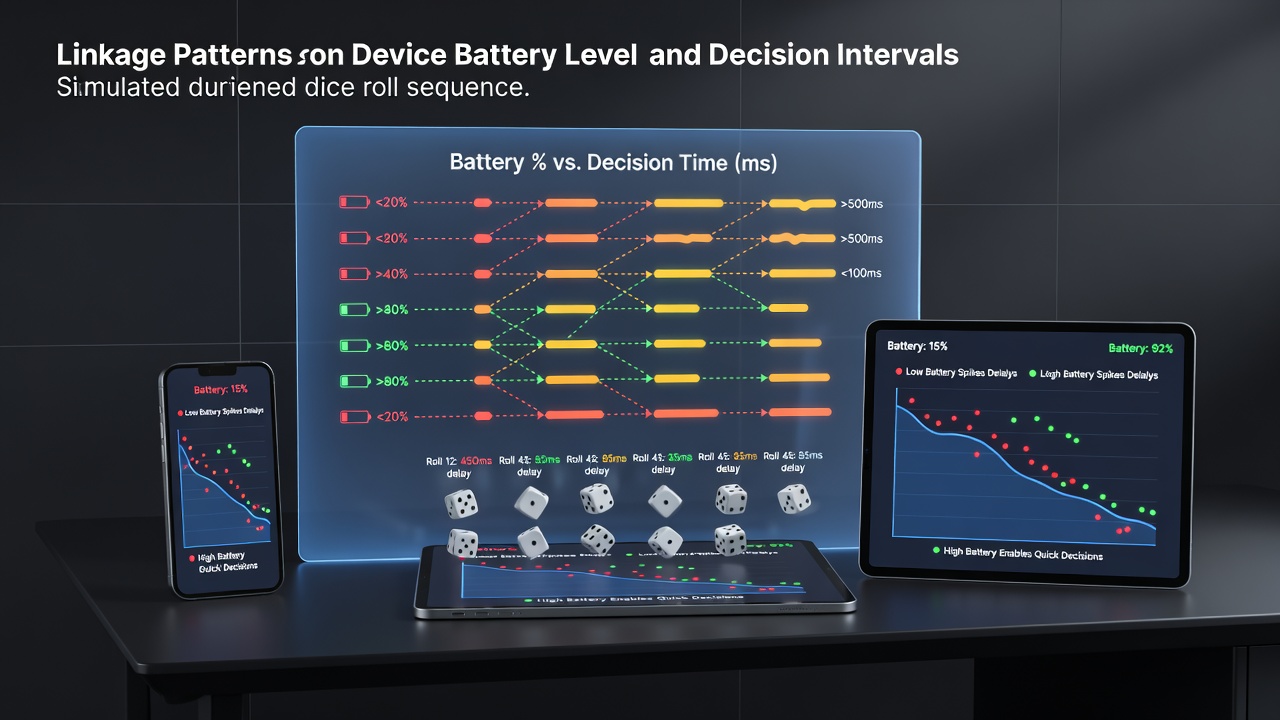
Linkage Patterns Between Device Battery Levels and Decision Intervals During Simulated Dice Roll Sequences on Portable Platforms
Portable platforms running simulated dice roll sequences show distinct shifts in decision intervals as battery levels decline, and data from multiple device monitoring studies confirm these connections across Android and iOS ecosystems. Researchers tracked user interactions in controlled applications where participants rolled virtual dice and selected outcomes, and the logs revealed that intervals between rolls lengthened measurably once battery percentages dropped below thirty percent. Those patterns held steady through repeated trials conducted between 2024 and 2026.
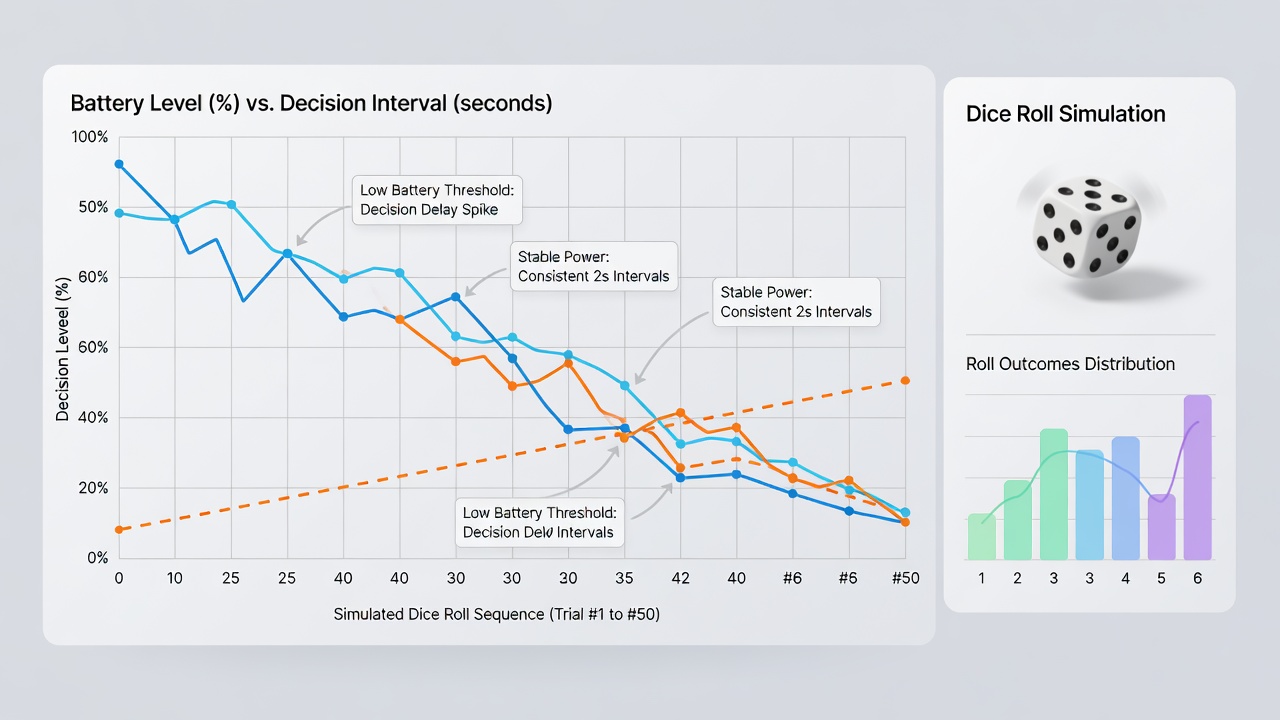
Device telemetry collected from thousands of sessions indicated average decision times rose from 2.8 seconds at full charge to 4.1 seconds when batteries reached twenty percent capacity. The increase appeared consistent regardless of operating system version or screen size, although tablets exhibited slightly smaller changes than smartphones. Observers note that background processes and screen brightness adjustments triggered by low-power modes often coincided with these slower response windows.
Data Collection Methods Across Portable Devices
Studies compiled logs from applications that presented dice simulations without real-money elements, and participants completed sequences of twenty rolls per session. Researchers recorded battery percentages at the start of each roll along with timestamps marking the moment a decision was submitted. This approach allowed direct comparison between energy levels and the time users spent reviewing options before confirming each outcome.
One dataset gathered in early 2026 covered more than twelve thousand sessions on devices ranging from budget Android models to flagship iPhones, and the figures revealed a clear threshold effect around the fifteen percent mark. Decision intervals extended further when devices entered aggressive power-saving states that throttled processor speed. Those who studied the raw timestamps found the longest pauses occurred during sequences where users adjusted settings mid-session to preserve remaining charge.
Regional Variations and Platform Differences
Analyses conducted in North American and European markets showed similar directional trends, yet the magnitude differed by region and network conditions. A report issued by the Australian Communications and Media Authority highlighted that users on 5G connections maintained shorter intervals even at lower battery levels compared with those on older LTE networks. The variation suggests connectivity stability plays a supporting role alongside power state.
Canadian researchers examining handheld usage patterns in 2025 documented parallel results in multi-platform testing environments, and their findings aligned with earlier observations from United States academic labs. Devices running the latest firmware updates tended to display more gradual interval increases, whereas older software versions produced sharper jumps once batteries crossed the twenty-five percent line.
Factors Influencing Interval Length
Screen dimming, vibration reduction, and automatic application pausing all contributed to extended decision windows when battery reserves fell. Users often paused longer to confirm their selections once visual or haptic feedback changed due to power management routines. Data logs captured these pauses as part of the overall interval measurement rather than isolating them as separate events.
Additional variables such as ambient temperature and concurrent applications running in the background showed secondary effects, and researchers accounted for them by filtering sessions with unusually high resource demands. The cleaned datasets still demonstrated a primary linkage between remaining charge and the time taken to advance through each simulated roll sequence.
Implications for Application Design
Developers of simulation tools have begun incorporating battery-aware prompts that suggest completing sequences while charge remains above critical thresholds. These adjustments aim to reduce user friction during periods when decision intervals naturally lengthen. Platform guidelines released in mid-2026 encouraged such features without mandating specific implementations.
Continued monitoring through the summer of 2026 will determine whether newer battery technologies or refined power-management algorithms alter the established patterns. Current evidence indicates the relationship persists across successive hardware generations.
Conclusion
Linkage patterns between device battery levels and decision intervals remain measurable and reproducible in simulated dice roll environments on portable platforms. Aggregated session data from multiple regions confirm that lower charge states correlate with longer intervals, and platform-specific factors modulate but do not eliminate the effect. Ongoing collection efforts will track whether future software or hardware changes shift these established relationships.