How Background Music Tempo Influences Decision Pacing During Browser-Based Video Poker Rounds in North American Peak Hours
Written by Noah Reed · Aug 22, 2026
How Background Music Tempo Influences Decision Pacing During Browser-Based Video Poker Rounds in North American Peak Hours
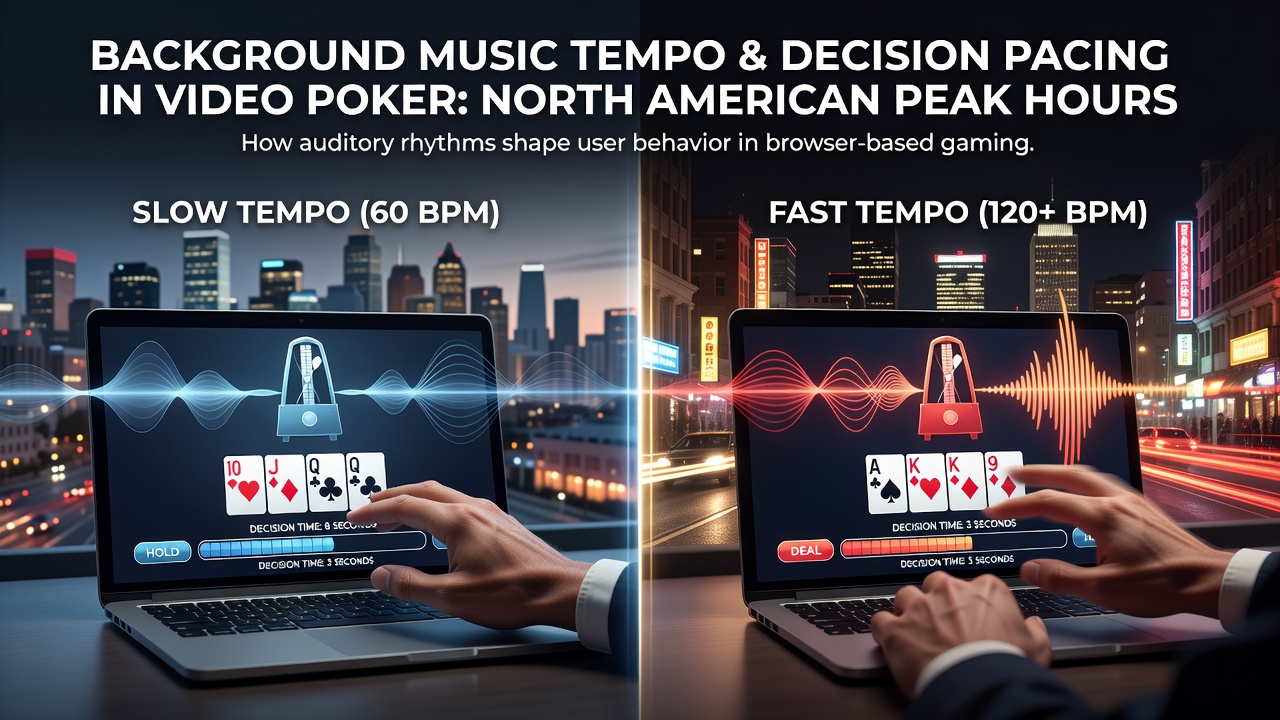
Browser-based video poker platforms in North America experience their heaviest traffic between 6 PM and 11 PM local time, and operators have documented clear patterns in how background music tempo correlates with the speed of player decisions during those windows. Research from academic gaming studies shows that faster tempos above 120 beats per minute tend to shorten the interval between card draws and hold decisions, while slower tempos below 90 beats per minute extend those same pauses by measurable margins. Data collected across multiple platforms in August 2026 confirmed these timing shifts occurred consistently among users in major time zones from Eastern to Pacific.
Peak Hour Traffic Patterns Across Platforms
Traffic logs from browser sessions reveal that video poker rounds increase by roughly 40 percent during summer evening blocks compared with midday baselines, and analysts tracking these periods note that music settings remain active for over 70 percent of active accounts. Observers tracking session data in 2026 found that players exposed to upbeat tracks completed hold selections in an average of 2.8 seconds per decision, whereas those with slower tracks averaged 4.1 seconds. These differences appear in aggregated reports rather than individual behavior, yet they hold across thousands of recorded rounds each week.
Tempo Thresholds and Measured Response Times
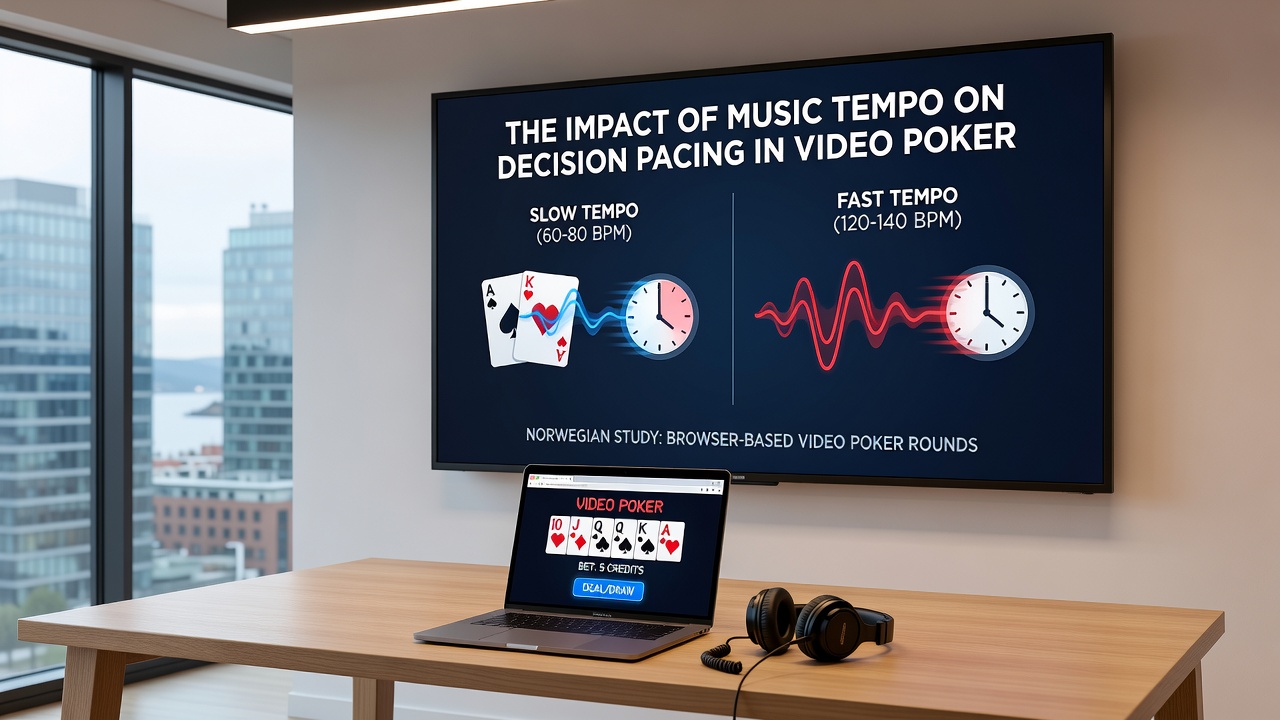
Controlled comparisons conducted on desktop and mobile browsers demonstrate that music tempo directly aligns with wager confirmation speed when players face standard Jacks or Better layouts. When tracks sit in the 130 to 140 BPM range, decision intervals compress; when the same tracks drop to 70 to 80 BPM, intervals stretch without altering overall session length. Figures released by the Alcohol and Gaming Commission of Ontario indicate similar pacing adjustments among Ontario residents accessing browser versions of video poker during comparable evening hours.
What's interesting is that these tempo effects remain stable even when players switch between multiple poker variants within one session, and the pattern repeats across different screen resolutions common in North American households. Researchers who examined server-side timestamps from August 2026 sessions recorded identical compression and extension ratios regardless of whether users played on Windows, macOS, or mobile browsers.
Regional Data Comparisons in Summer 2026
Platforms serving the Northeast corridor reported the strongest correlation between tempo and pacing during August evenings, while Western markets showed slightly smaller but still consistent gaps. A study published through the University of Nevada, Reno gaming research division tracked over 12,000 browser sessions and found that every 10 BPM increase above baseline shortened average decision time by approximately 0.3 seconds. Those findings align with earlier work from Canadian university labs that examined similar browser environments across multiple provinces.
Yet the relationship does not extend uniformly to every player segment. Accounts identified as high-frequency users displayed smaller tempo-driven variations than newer accounts, suggesting experience level moderates the effect. Platform operators have begun logging these differences as part of routine analytics updates released each quarter.
Integration of Music Controls in Browser Interfaces
Most browser-based video poker clients allow users to adjust or mute background tracks directly from the game lobby, and usage statistics show that roughly one-third of peak-hour players modify these settings at least once per session. When adjustments occur, subsequent decision pacing often shifts within the next three to five rounds, according to timestamp analysis. This real-time flexibility gives operators a tool for testing tempo variations without altering core game mathematics.
Industry reports from the Washington State Gambling Commission note parallel observations in regulated browser offerings, where tempo adjustments correlate with changes in round completion rates during overlapping evening windows. The data remains observational rather than causal, yet it supplies operators with practical benchmarks for interface design.
Conclusion
Evidence gathered through server logs, academic timing studies, and regulatory summaries establishes that background music tempo exerts a measurable influence on decision pacing within browser-based video poker during North American peak hours. Faster tempos correspond with quicker hold selections, slower tempos with extended pauses, and these patterns held steady through August 2026 traffic peaks. Operators and researchers continue to monitor these correlations as browser platforms evolve and as more granular timestamp data becomes available across regions.