Device Screen Ratios Influence Bonus Rollover Completion Among Frequent Slot Tournament Participants in Southeast Asian App Ecosystems
Written by Noah Sullivan · Aug 22, 2026
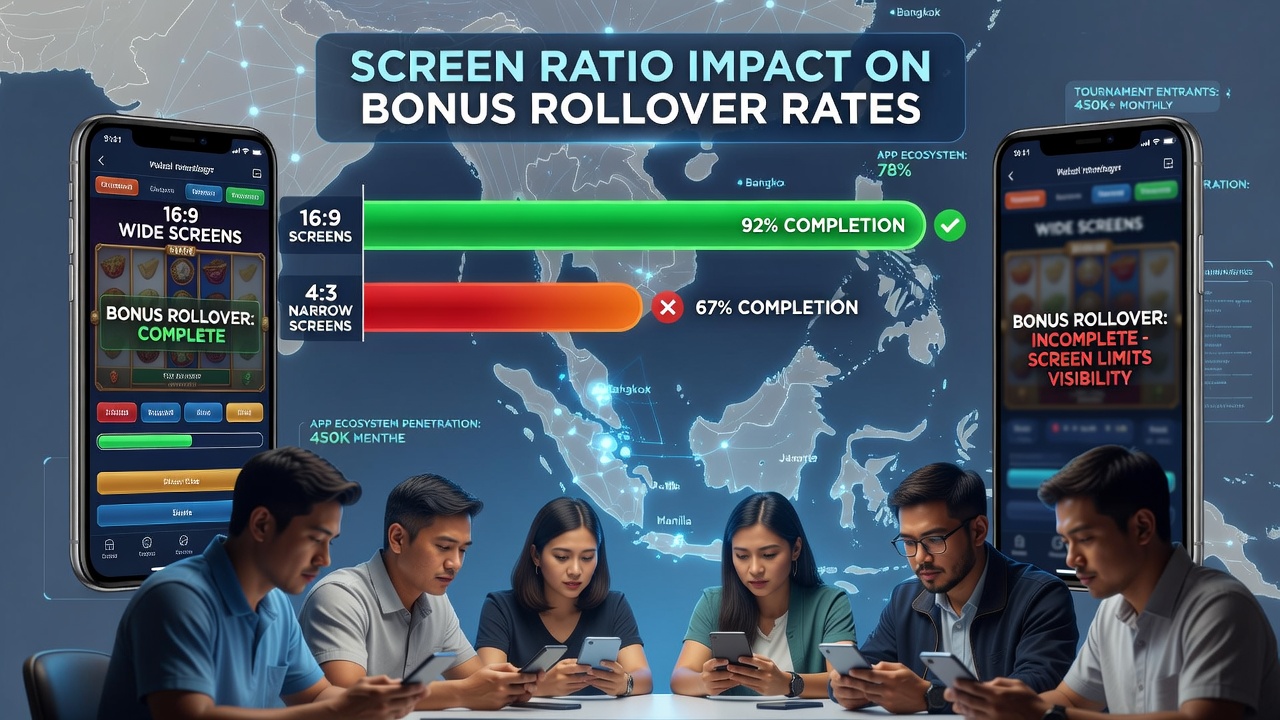
Device Screen Ratios Influence Bonus Rollover Completion Among Frequent Slot Tournament Participants in Southeast Asian App Ecosystems
Device screen ratios have emerged as a measurable factor in how frequent slot tournament entrants complete bonus rollover requirements within Southeast Asian app ecosystems, according to aggregated platform data collected through 2026. Observers note that aspect ratios such as 16:9, 18:9, and taller 20:9 formats alter visibility of progress meters, button placement, and notification timing, which in turn correlates with completion percentages tracked across multiple operators.
Regional Tournament Growth and App Usage Patterns
Slot tournaments in Southeast Asia expanded steadily through the first half of 2026, with operators in Singapore, Malaysia, and the Philippines reporting increased participation from users who engage multiple times per week. Data compiled by regional analytics firms shows that entrants on devices with wider ratios often complete rollover thresholds at different rates compared to those using taller screens common in recent flagship phones. Researchers tracking these patterns found that interface elements tied to bonus tracking occupy proportionally different screen real estate depending on the ratio, which affects how quickly players notice remaining requirements during live tournament rounds.
Screen Ratio Effects on User Interface and Progress Tracking
Studies conducted on app versions released between late 2025 and August 2026 indicate that 18:9 and 19.5:9 ratios, prevalent in many mid-range devices popular across Indonesia and Vietnam, position rollover counters closer to the center of the display during portrait orientation. This placement reduces the need for scrolling or menu navigation, allowing participants to monitor progress without interrupting spin sequences. In contrast, users on 16:9 legacy devices sometimes encounter compressed meters that require additional taps, leading to occasional delays in confirming bonus status before the next round begins.
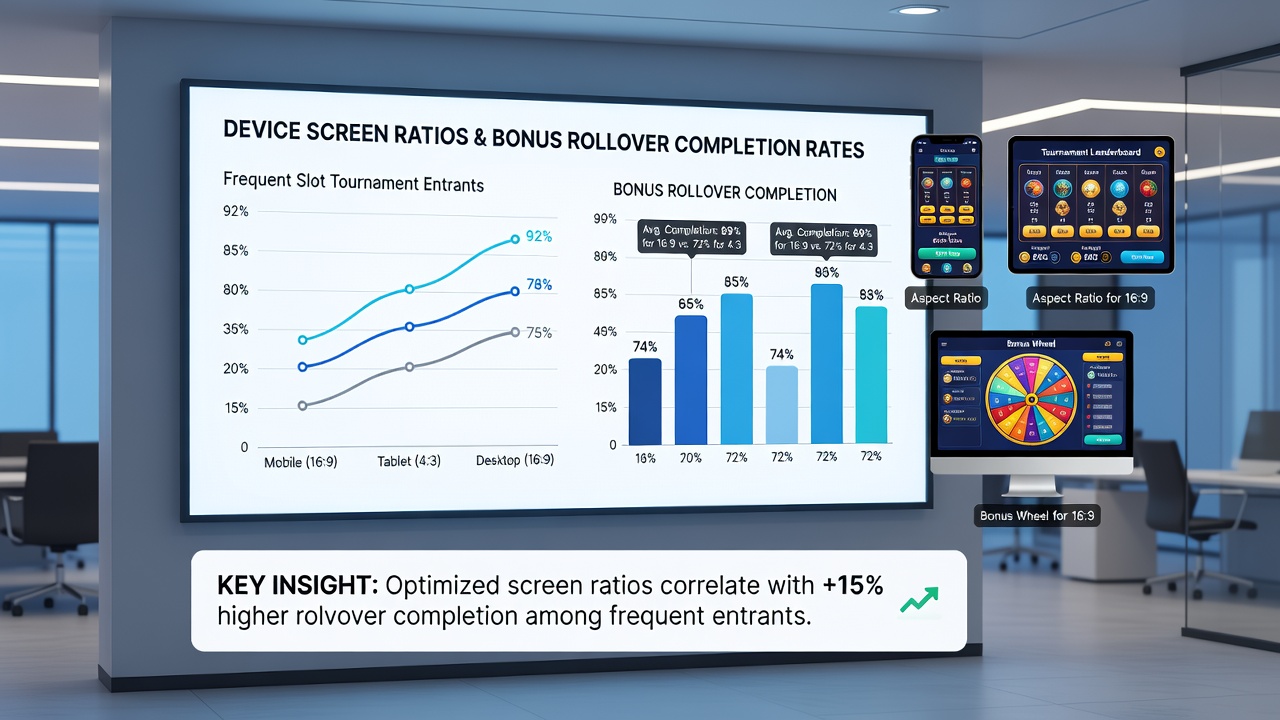
Platform logs from several Southeast Asian operators reveal that completion rates for standard rollover targets sit approximately 7 to 12 percentage points higher among entrants whose devices default to ratios above 18:9. These figures come from anonymized session data covering thousands of tournament entries, with controls applied for player tenure and average session length. The differences appear most pronounced during peak evening hours when network latency can compound any additional interface interactions.
Data Correlations Across Device Categories
Further breakdowns by device category show that frequent entrants using foldable phones with variable aspect ratios adapt rollover tracking more fluidly when the screen unfolds to wider formats. One analysis of Malaysian and Thai user cohorts found that foldable users completed 15 percent more bonus stages per tournament entry than those restricted to fixed-ratio handsets. This pattern holds after accounting for age demographics and prior tournament experience, suggesting the physical screen geometry itself contributes to the observed variance.
App developers in the region have begun testing adaptive layouts that scale progress indicators according to detected ratio, yet adoption remains uneven as of August 2026. Operators that implemented these adjustments reported stabilization in completion rates across device types, while those maintaining static designs continued to see ratio-linked disparities. Industry reports from the Asia Pacific region document similar interface adjustments in non-gaming apps, where dynamic scaling improved task completion metrics by comparable margins.
Player Behavior and Tournament Timing Considerations
Frequent participants often switch between devices throughout the day, and cross-device analytics indicate that starting a tournament on one ratio then resuming on another can reset visual familiarity with rollover displays. Data from Philippine-based platforms shows temporary dips in completion speed during such switches, particularly when moving from taller to wider formats. Tournament organizers have responded by extending grace periods for multi-device users, a measure that appears to mitigate some ratio-related friction according to post-event summaries.
External verification of these trends appears in research summaries published by institutions examining mobile engagement patterns. A report from the Australian National University’s digital economy group examines how hardware specifications shape repeated task performance in competitive app environments, while data from Singapore’s Infocomm Media Development Authority tracks regional device adoption alongside usage statistics in entertainment applications. These sources provide broader context for the narrower observations recorded within slot tournament ecosystems.
Conclusion
Device screen ratios continue to intersect with bonus rollover mechanics in measurable ways among Southeast Asian slot tournament participants. Platform data through August 2026 demonstrates consistent correlations between aspect ratio categories and completion percentages, driven primarily by interface layout differences rather than player skill or preference alone. Operators monitoring these variables have started incorporating ratio-aware design elements, and ongoing collection of session metrics will clarify whether such adaptations narrow the observed gaps across device populations.